How to Choose the Right ERP for a Logistics Company
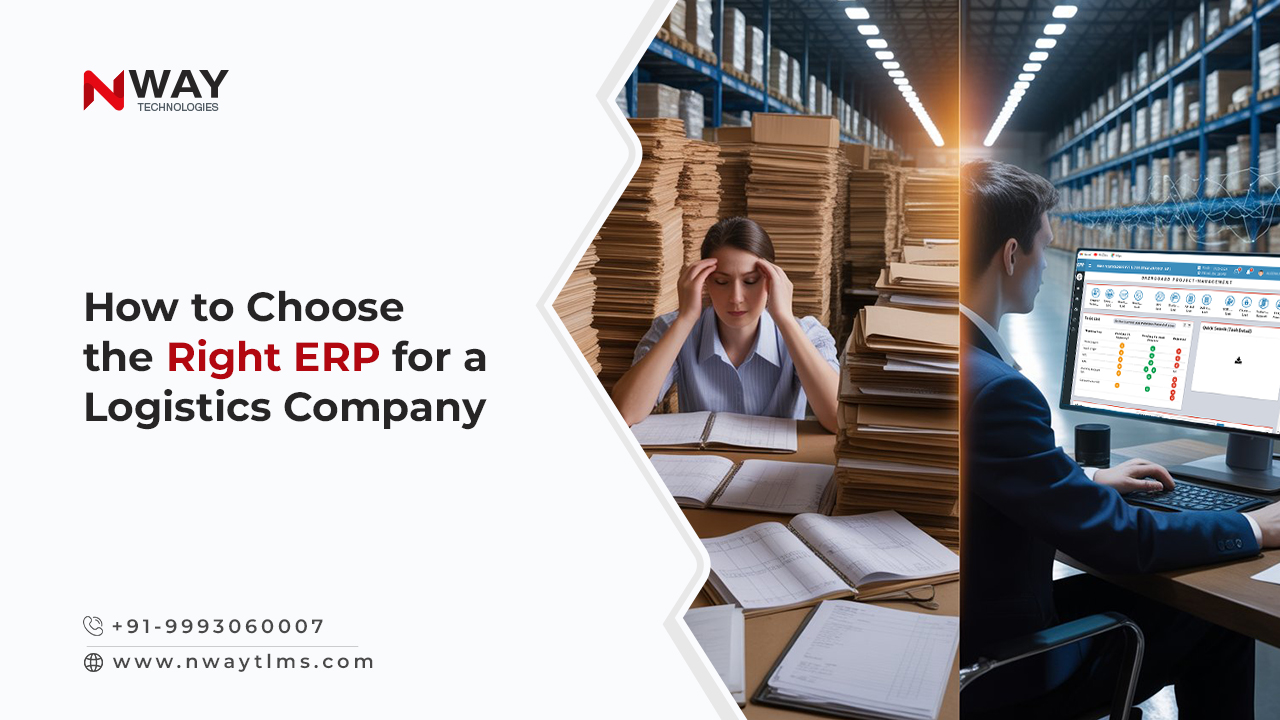
When you run a logistics company, efficiency and precision are key. Choosing the right ERP (Enterprise Resource Planning) is important to get extra margins. A custom-built Logistics and Transport ERP software helps you streamline operations, reduce costs, and improve customer satisfaction.
But how do you choose the best ERP for logistics and transport?
In this guide, we will walk you through the essential factors to consider when selecting an ERP for your logistics company and how Nway TLMS can make this process easier with its powerful, user-friendly solutions.
Table of Contents:
- What is ERP Software for Logistics?
- Key Benefits of an ERP for Logistics Companies
- Top Features to Look for in the Best ERP for Logistics
- Cloud-based ERP vs On-Premise ERP
- How to Evaluate and Compare ERP Vendors
- Mistakes to Avoid When Choosing an ERP
- Why Nway TLMS is the Best ERP for Logistics
TLDR: The Right ERP for Logistics Simplified
Look for an ERP that suits your business needs - from inventory management to real-time tracking.
- Key features include fleet management, CRM integration, and scalability.
- Choose between cloud-based vs. on-premise systems.
- Consider vendor reputation and cost-effectiveness.
- Make sure the ERP is easy to use and integrates with your existing tools.
- Nway TLMS offers a comprehensive, scalable, cost-effective ERP ecosystem with AI-powered features for increased margins and smoother business operations.
Let’s dive deeper into what you should look for when choosing the right ERP for your logistics company.
What is ERP Software for Logistics?
An ERP for logistics company integrates various functions within your business, such as inventory management, order processing, fleet management, and billing, into one system. This helps you manage everything from one platform, making it easier to track and control every part of your operations in real-time.

Key Benefits of an ERP for Logistics Companies
ERP systems help logistics companies centralize operations, streamline workflows, and reduce errors. According to logistics industry studies, technology adoption is one of the top factors driving operational efficiency in logistics (source: McKinsey, 2024). The right ERP can enable:
Real-time shipment tracking: With increasing customer expectations, real-time visibility is essential. According to research, 74% of logistics companies report that real-time tracking improves customer satisfaction.
Inventory management: ERP systems help track stock in real-time, optimize warehouse space, and reduce overstocking by nearly 10-20%.
Fleet management: A study by DHL indicates that fleet optimization through ERP systems can reduce transportation costs by up to 15%.
Top Features to Look for in the Best ERP for Logistics
When evaluating ERP solutions, ensure that the software includes the following core features for a smoother logistics operation:
Inventory and Warehouse Management
The ability to track stock in real-time is a must for any logistics management ERP. This will help avoid stockouts and overstocking, both of which can be costly.
Fleet Management
A logistics ERP should offer real-time fleet tracking, route optimization, and driver management, helping reduce fuel consumption and delivery times.
Order and Shipment Tracking
Order tracking features allow you to manage shipments from pickup to delivery. This feature provides transparency to both your team and customers, improving trust and efficiency.
Customizable Invoicing and Payment Tracking
Make sure the ERP offers customizable invoicing to suit your clients' unique needs, along with the ability to track receivables and outstanding payments.
Cloud-based ERP vs On-Premise ERP
There are two main types of ERP solutions: cloud-based ERP and on-premise ERP. Here's a comparison to help you decide which one is better for your logistics company:
| Feature | Cloud-based ERP | On-premise ERP |
|---|---|---|
| Cost | Lower upfront costs | Higher upfront costs |
| Access | Accessible from anywhere | Limited to office locations |
| Scalability | Easily scalable | Difficult to scale |
| Maintenance | Vendor-managed | Requires internal IT team |
| Updates | Automatic updates | Manual updates |
Cloud-based ERP is generally more cost-effective and flexible, making it the better choice for most logistics companies.

How to Evaluate and Compare ERP Vendors
Choosing the right ERP for logistics goes beyond just selecting features. The total cost of ownership (TCO) is a critical factor that many businesses overlook. A recent study found that companies who properly evaluate the TCO of ERP solutions save up to 20% on implementation costs.
Here’s what to consider when evaluating ERP vendors:
Vendor Reputation and Support
Choose a vendor with a proven track record. According to a 2024 survey by Gartner, 80% of ERP users reported higher satisfaction when they selected vendors with strong customer support and regular system updates.
Total Cost of Ownership (TCO)
Include not just the upfront costs but also the ongoing costs for training, maintenance, and updates. Nway TLMS offers a cost-effective pricing model that reduces long-term costs, providing a 30% reduction in overhead costs compared to traditional ERP systems.
Integration Capabilities
A strong ERP for logistics should integrate smoothly with your existing tools like CRM, accounting software, and warehouse management systems. A report from Deloitte highlights that companies using integrated systems see a 25% improvement in efficiency across departments.
Mistakes to Avoid When Choosing an ERP
Ignoring Integration: Make sure the ERP system integrates well with your existing tools. Overlooking this can lead to data silos.
Underestimating the Learning Curve: ERP systems can be complex. Ensure proper training and onboarding to maximize the software’s value.
Not Considering Future Growth: Choose an ERP that can grow with your business. Failing to do so can result in costly upgrades down the line.
Not Sure Which ERP Is Right for You?
Schedule a free consultation with our experts at Nway TLMS. We'll guide you through the best Logistics ERP solutions tailored to your needs.
Why Nway TLMS is the Best ERP for Logistics
Nway TLMS is the perfect ERP for logistics because it’s designed to handle all your logistics operations in one integrated system. Here’s why:
Comprehensive Logistics Features
From inventory management and real-time tracking to customized invoicing and fleet management, Nway TLMS includes everything your logistics company needs to run smoothly.
AI-Powered Automation
Nway TLMS offers cutting-edge AI features that set it apart from other ERP systems:
AI Assistant: With our AI assistant, you can get real-time reports and insights by simply asking in natural language. It helps you quickly analyze KPIs and make data-driven decisions without diving deep into complex reports.
SmartEntry AI: The SmartEntry AI feature automates invoice entry using OCR technology, reducing the time spent on manual data entry and ensuring accurate records.
Easy Integration
Nway TLMS integrates seamlessly with your existing systems, so you can streamline your logistics operations without disrupting your current workflow.
Scalable and Cost-Effective
Whether you're a small logistics provider or a large enterprise, Nway TLMS scales to meet your needs. The cloud-based system is cost-effective and flexible, adapting to your business as it grows.
Final Thoughts
Choosing the right ERP for logistics companies is essential for increasing efficiency, reducing costs, and improving customer service. With the right logistics ERP system, you can automate routine tasks, track shipments in real time, and streamline your entire operation.
Nway TLMS provides an all-in-one solution for logistics management ERP. With its powerful features like real-time tracking, AI-powered insights, and seamless integration, Nway TLMS is the best ERP for logistics companies looking to stay ahead of the competition.
See How We Helped Other Logistics Companies!
Want to learn how we’ve helped other businesses like yours improve efficiency and reduce costs?
FAQs
An ERP system helps improve customer service in logistics by providing real-time shipment tracking, automated updates, and accurate inventory management. This means customers can receive timely updates about their shipments, reducing delays and errors. With features like CRM integration, customer inquiries are resolved faster, and communication becomes seamless, ensuring a better experience for your clients. By optimizing processes, your business can respond to customer demands more effectively, improving overall satisfaction.
Yes, one of the key benefits of an ERP for logistics companies is its integration capabilities. Most modern ERPs, like Nway TLMS, can integrate seamlessly with other software tools you’re using, such as CRM, WMS (Warehouse Management System), TMS (Transportation Management System), and accounting software. This ensures all your systems are working together, allowing for better data flow, improved decision-making, and reduced manual effort in transferring information across platforms.
AI-powered features in an ERP, like Nway TLMS’ SmartEntry AI and AI Assistant, can significantly improve logistics operations by automating routine tasks, improving decision-making, and providing deeper insights. For example: SmartEntry AI automates invoicing and data entry, reducing human errors and speeding up the billing process.
The AI Assistant allows users to query the system using natural language to generate reports and gain insights on KPIs, making it easier for decision-makers to access real-time data. By utilizing AI, logistics companies can improve productivity, reduce operational costs, and increase accuracy in their operations.
Implementing logistics management ERP can help your business save money in several ways:
Reduced operational costs: Automation reduces the need for manual work, lowering labor costs.
Improved resource allocation: Real-time data helps in making better decisions, avoiding overstocking or understocking.
Faster shipments: ERP ensures more efficient route planning and real-time tracking, speeding up deliveries and improving customer satisfaction.
In the long run, these improvements lead to significant cost savings.
Let’s make running your construction business a little less crazy.
Subscribe for weekly insights.
Recent Posts