What Is Bilty in Transport? Complete Guide for Transporters & Shippers
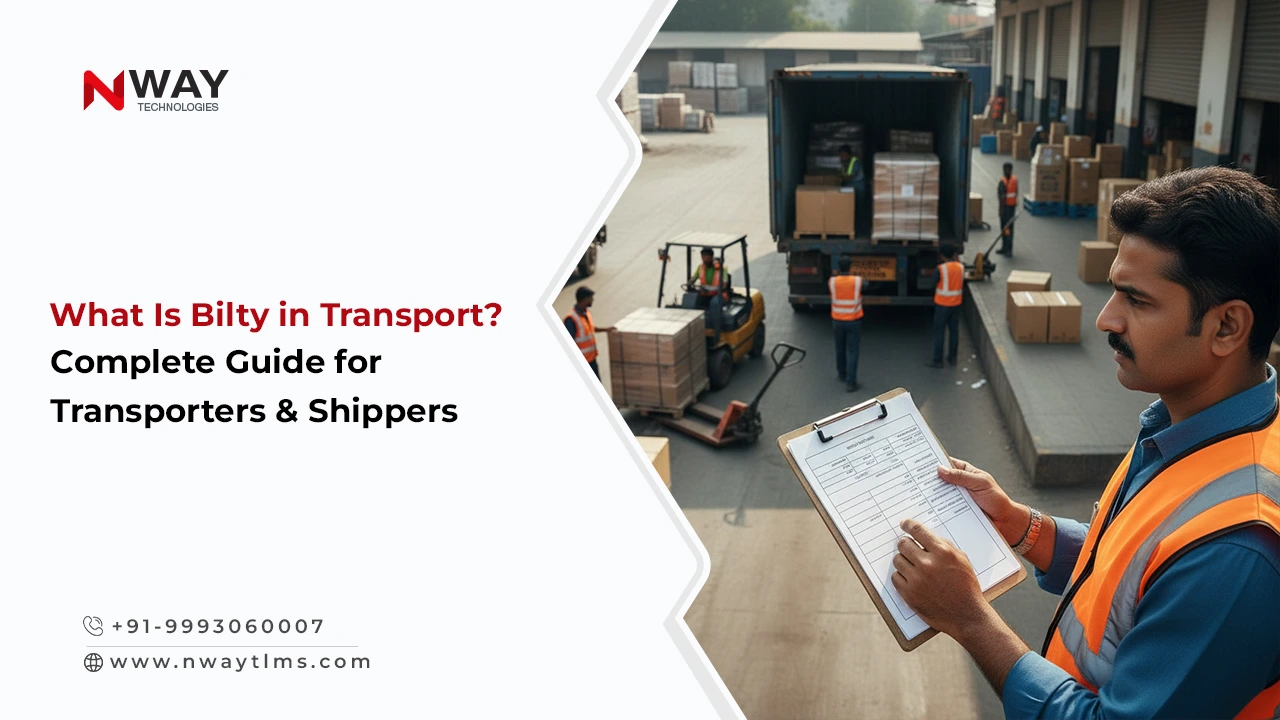
In Indian transport operations, documents are still the backbone of daily work. One of the most important documents is the bilty. It is used by transporters, shippers, and logistics teams across India. This guide explains bilty in transport, why it is required, and how it supports safe and controlled movement of goods.
Understanding bilty in transport helps avoid delivery disputes, billing errors, and legal issues during shipment.
Table of Contents:
- What Is Bilty?
- Bilty Meaning in Transport
- What Is a Bilty Document in Transport?
- Bilty Document Meaning Explained
- Types of Bilty in Transport
- Why Bilty Is Important in Logistics
- How Bilty Is Used in Transport Operations
- Problems With Manual Bilty Handling
- Bilty in Transport and Digital Systems
- How Nway TLMS Supports Smarter Bilty Management
What Is Bilty?
A bilty is a transport document issued by a transporter after receiving goods from a shipper. It confirms that the transporter has accepted responsibility for moving the goods to the destination.
The bilty meaning in transport is simple. It acts as proof of receipt and as a contract between the shipper and the transporter. In many regions, it is also called a lorry receipt.
Bilty Meaning in Transport
The bilty meaning in transport is based on three practical uses:
- Proof that goods are handed over
- Record of shipment details
- Reference during delivery and billing
Without a bilty, it becomes difficult to confirm quantity, condition, or delivery responsibility. That is why bilty in transport is used for almost every commercial shipment.
What Is a Bilty Document in Transport?
A bilty document in transport is a written or printed record issued by the transporter. It contains shipment and delivery details.
A standard bilty document in transport includes:
- Consignor and consignee details
- Type and quantity of goods
- Vehicle number
- Origin and destination
- Freight charges
This document is checked during delivery to verify goods and complete handover.
Bilty Document Meaning Explained
The bilty document meaning is confirmation of goods movement under agreed terms. It protects both the transporter and the shipper.
If goods are delayed, damaged, or lost, the bilty document meaning becomes critical for claims and settlements. It clearly defines responsibility.
Types of Bilty in Transport
There are two common types of bilty in transport used in India.
Consignment Bilty
Delivery is allowed only after presenting the original bilty. It is used when payment is pending.
Delivery Bilty
Delivery is allowed without the original bilty. It is used when payment terms are already settled.
Both types of bilty in logistics support different business requirements.
Why Bilty Is Important in Logistics
Bilty in logistics ensures shipment accuracy and accountability. It helps all parties stay aligned during transport.
According to the Ministry of Commerce & Industry, Government of India, documentation issues contribute to 15–20% of logistics delays in road transport operations.
This makes bilty in transport a critical document for avoiding delays and disputes.
How Bilty Is Used in Transport Operations
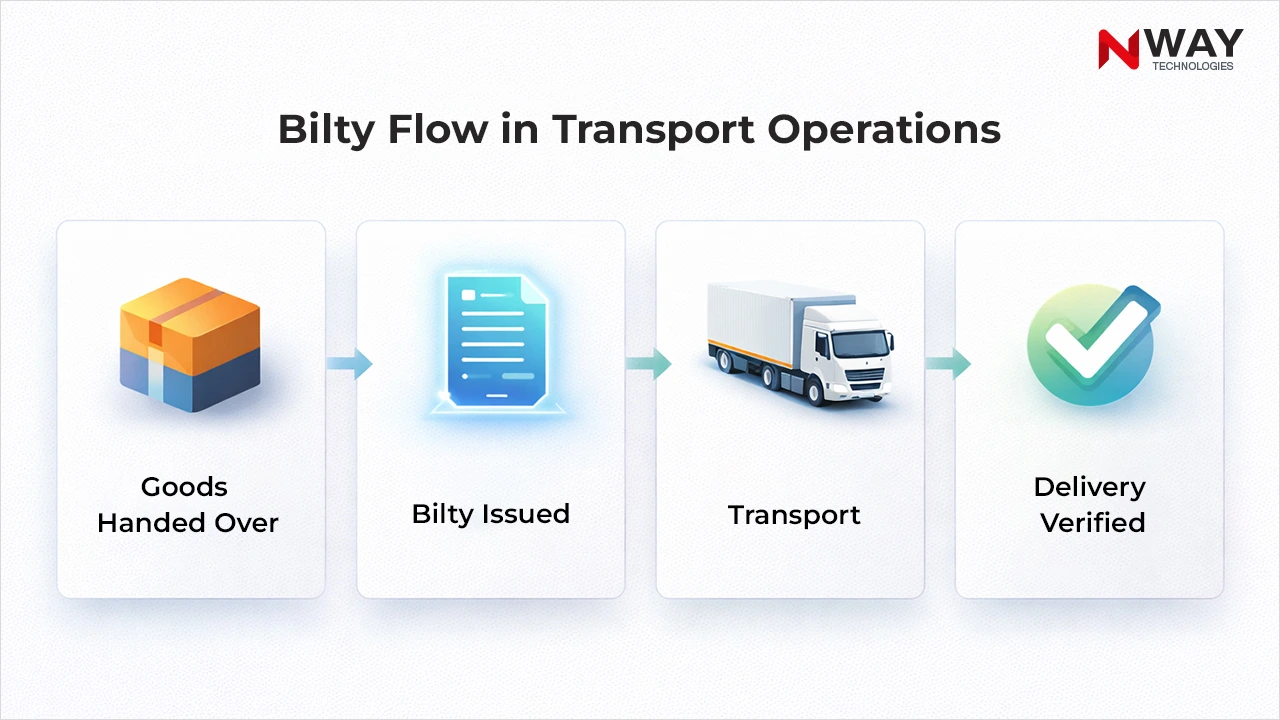
The use of bilty in transport follows a clear process:
- Goods are handed over to the transporter
- Transporter issues the bilty
- Bilty details are shared with the receiver
- Delivery is completed based on bilty verification
Errors in bilty details can lead to delivery delays or payment issues.
Reduce manual work and confusion across shipments without overcomplicating processes.
Problems With Manual Bilty Handling
Manual handling of the bilty document in transport often leads to:
- Data entry errors
- Lost or damaged paperwork
- Delayed billing
- Difficulty in tracking shipments
When teams do not clearly understand the bilty document meaning, it increases operational risk and inefficiency.
Bilty in Transport and Digital Systems
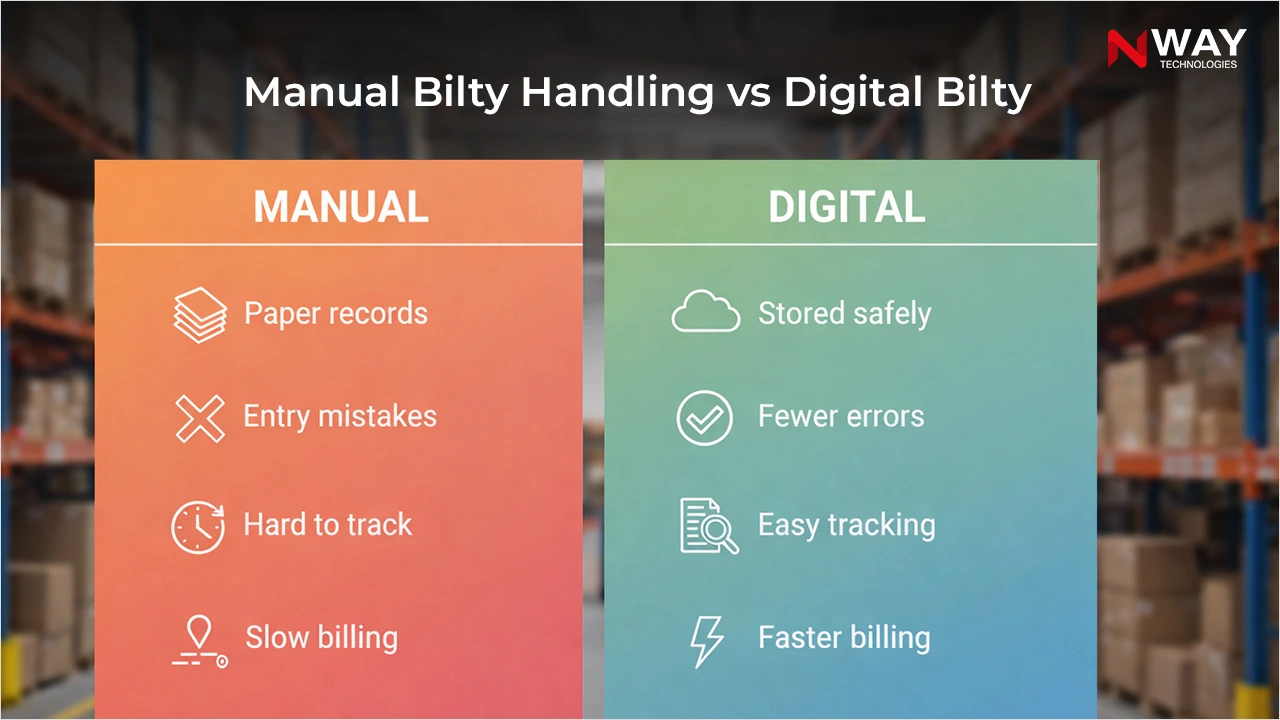
Digital systems improve how bilty in transport is managed. When bilty records are stored digitally, visibility and accuracy improve.
According to a recent study, digital documentation can reduce logistics processing errors by over 30%.
Digital handling of bilty in logistics also speeds up billing and reconciliation.
How Nway TLMS Supports Smarter Bilty Management
Nway TLMS helps transport companies manage bilty in transport in a structured and controlled way. Bilty data is captured once and connected with trips, invoices, and delivery records.
Nway’s AI capabilities assist by validating bilty entries, identifying mismatches, and generating reports instantly. This reduces manual checking and improves accuracy without changing existing workflows. As a result, bilty in logistics becomes easier to manage, billing becomes faster, and disputes reduce.
Conclusion
Bilty in transport is a core document that supports legal, safe, and accurate movement of goods. Knowing what is bilty, understanding bilty meaning in transport, and using the bilty document in transport correctly helps transporters and shippers avoid delays and disputes.
When combined with digital systems, bilty in logistics becomes more reliable and easier to manage. Platforms like Nway TLMS help transport businesses handle bilty records efficiently, bringing better control, visibility, and operational stability to daily logistics work.
Try Nway TLMS to see how automated data handling and reporting can improve daily logistics tasks.
FAQs
Yes, bilty is required for most commercial road transport movements in India. It acts as proof of goods handed over and is commonly asked for during delivery verification, audits, or disputes.
If a bilty is lost, delivery may get delayed, especially for consignment bilty shipments. In such cases, transporters usually require indemnity letters or alternate verification before releasing goods.
Yes, bilty and lorry receipt generally mean the same document. The name varies by region, but the purpose, usage, and legal importance remain the same in transport operations.
Yes, many transport companies now create bilty digitally. Digital bilty records reduce errors, improve tracking, and help with faster billing and reconciliation.
Nway TLMS helps store, track, and validate bilty data digitally. It reduces manual errors, links bilty records with trips and invoices, and improves visibility across transport operations.
Let’s make running your construction business a little less crazy.
Subscribe for weekly insights.
Recent Posts